

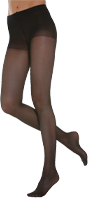
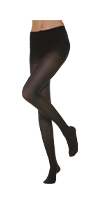
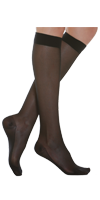
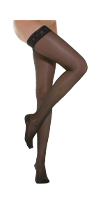
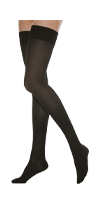
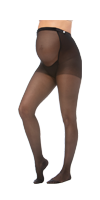



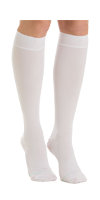


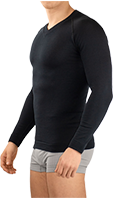


Anti-Embolism Knee High Socks


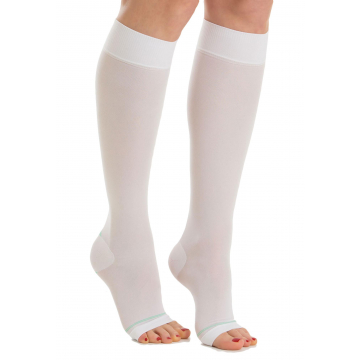
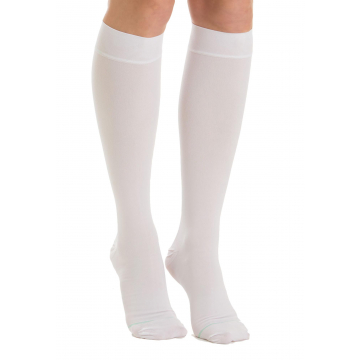
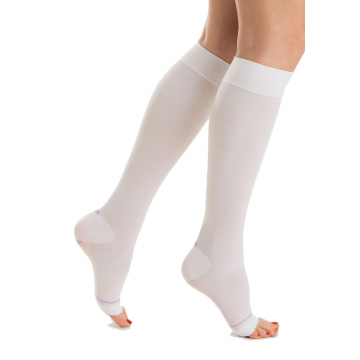
Anti-embolism knee-high stockings: what they are and when to wear them
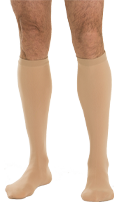
Anti-embolism knee-high stockings belong to the family of graduated compression stockings designed to help prevent thrombotic events or to support the treatment of an existing deep vein thrombosis. Keep reading to find out how they work and when they should be worn.
Anti-embolism knee-high stockings: how they work
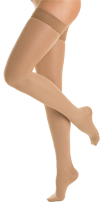
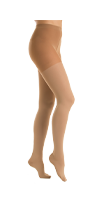
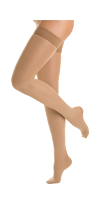
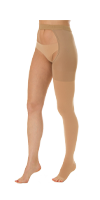
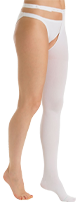
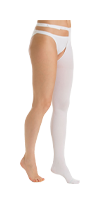
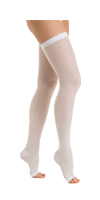
Depending on your condition and your doctor's recommendations, you can choose from different types of anti-thrombosis stockings: knee-high stockings, thigh-high stockings and "single-leg pantyhose". In this article, we take a closer look at the features of anti-embolism knee-high stockings, the shortest of these garments.
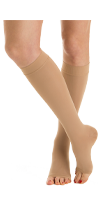
Elastic and designed to provide effective support, anti-embolism knee-high compression stockings provide graduated compression, applying the greatest pressure around the ankle and gradually decreasing towards the knee. The decreasing compression from the ankle to the calf encourages blood to flow more efficiently back towards the heart through veins with a smaller diameter. Supporting venous return from the lower limbs upwards helps reduce venous stasis and, consequently, the risk of blood clot formation. By improving the function of the venous valves, knee-high stockings for thrombosis also help counteract blood pooling, reducing limb circumference and increasing blood flow velocity.
Post-operative knee-high compression stockings: when to wear them
Post-operative knee-high compression stockings are frequently included in preventive or therapeutic thrombosis treatment following surgery that requires the patient to remain immobilised or confined to bed. To help prevent venous stasis from negatively affecting circulation in the lower limbs, patients are often advised to wear anti-thrombosis compression stockings (knee-high stockings, thigh-high stockings or single-leg pantyhose) to support venous return until the patient is able to walk again and therefore reduce the risk of thrombosis through movement. When the patient starts walking again, post-operative knee-high compression stockings are removed while walking and gradually discontinued once the patient no longer needs to spend long periods in static positions.
Anti-embolism knee-high compression stockings: how to wear them
To use anti-embolism knee-high compression stockings correctly, it is important to learn how to put them on properly and understand how to care for the garment in order to preserve its functional properties.
First of all, for anti-embolism knee-high stockings to provide the correct level of pressure, they must be positioned properly: to put them on easily and accurately, make sure that your feet and legs are dry. When putting on the stocking (which can be rolled down and then gradually unrolled from the toes upwards), it is essential to take great care to avoid folds or wrinkles that could compromise the effectiveness of the garment and cause discomfort, pain or swelling.
To avoid excessive pressure that could interfere with proper tissue oxygenation, it is also extremely important that anti-embolism knee-high compression stockings are the correct size. As for their care, remember that anti-embolism knee-high stockings should be hand washed in lukewarm water using a mild neutral soap and then left to dry away from direct sunlight.