

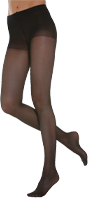
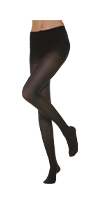
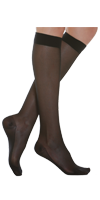
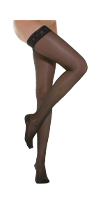
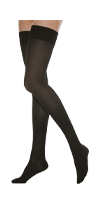
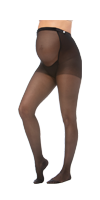
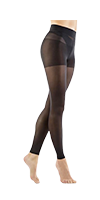


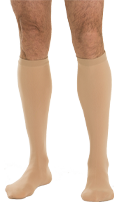
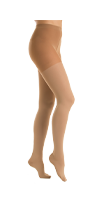
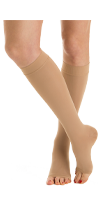
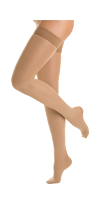
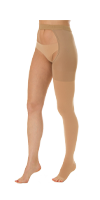
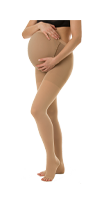


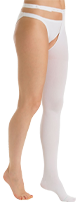
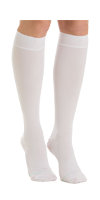
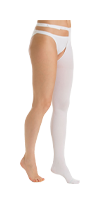
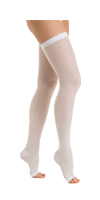





Anti-Embolism Thigh and Tigh High Stocking With Waist Attachment

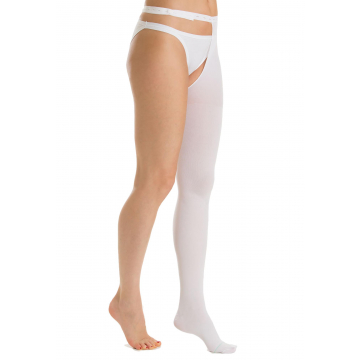
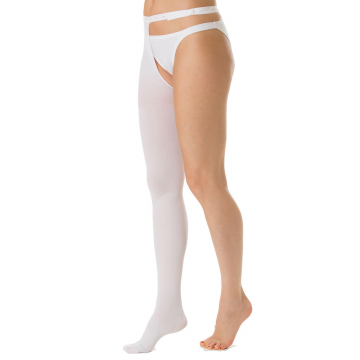
Anti-embolism tights and single-leg anti-embolism tights: what they are and when to wear them
Single-leg anti-embolism tights and full anti-embolism tights are graduated compression garments used in medical and clinical settings to help prevent thrombotic events, particularly in connection with surgery. Keep reading to find out what they are and how they should be worn.
Single-leg anti-embolism tights: what they are and how they work
Along with knee-high stockings and full tights designed for the same purpose, single-leg anti-embolism compression tights may be prescribed or recommended by doctors to reduce the risk of developing deep vein thrombosis, which can occur during periods of forced inactivity, immobilisation or bed rest following surgery or required for other medical reasons.
Elastic and designed to provide effective support, single-leg anti-embolism tights feature graduated compression that is strongest around the foot and ankle and gradually decreases towards the thigh and abdomen. This specific compression, which decreases from the bottom upwards, encourages blood to flow more efficiently back towards the heart through veins with a smaller diameter. By supporting venous return, it helps reduce venous stasis and, consequently, the risk of blood clot formation.
Compared with full tights, single-leg anti-embolism tights are generally recommended for patients who require compression on only one leg or in cases where individual leg shape or build makes a single-leg garment more suitable.
Anti-embolism tights: symmetrical compression
Depending on the area of the body requiring treatment, healthcare professionals may recommend or prescribe specific compression garments such as anti-embolism tights.
Particularly suitable for people who need to remain in static positions for long periods and for pregnant women, anti-embolism compression tights help prevent the development of venous disorders in people at risk by providing graduated compression along the entire leg, promoting blood flow towards the heart and supporting venous return.
Anti-embolism tights and single-leg anti-embolism tights: how to wear them
Whether using single-leg anti-embolism tights or full anti-embolism tights, learning how to put these medical garments on correctly is essential to obtain their intended benefits and, equally importantly, to avoid problems associated with incorrect use.
First of all, for anti-embolism tights and single-leg anti-embolism tights to provide the correct level of pressure, they must be positioned properly. To put the stockings on easily and correctly, make sure that the feet and legs are dry. When putting on the tights (which can be rolled down and then gradually unrolled from the toes upwards), particular care should be taken to avoid folds or wrinkles that could compromise the effectiveness of the garment and cause discomfort, pain or swelling.
To avoid excessive pressure that could interfere with proper tissue oxygenation, it is also extremely important that anti-embolism tights, as well as single-leg tights, are always the correct size and do not constrict the legs.